


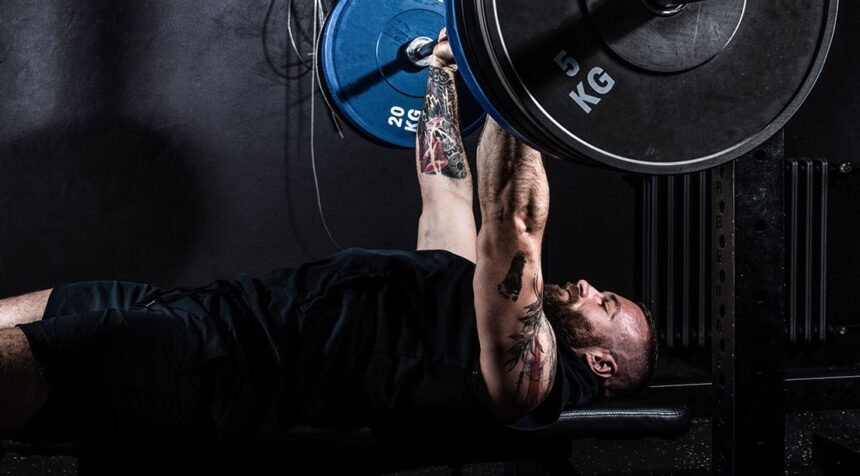
There is a universal idiom woven to the modern lexicon when it comes to quantifying physical prowess. “How much can you lift?” is the question almost every single one of us has gotten. What does it refer to? How much you can bench. Love it or hate it, the bench press has become the universal measuring stick of upper-body strength.
For beginners, however, the bench press isn’t about impressing your buddies. That one exercise has probably crippled more shoulders than any other exercise in the gym. Not because it’s dangerous—but because people are idiots. The bench press is one of the most effective compound movements ever developed for building the chest, shoulders and triceps. Done correctly, it will remain a cornerstone of your training for decades. Done incorrectly, and you’ll forever be doing the workaround.
The Most Important Bench Press Rule That Could Save Your Shoulders
The first rule of the bench press is simple: leave your ego at the door.
Nobody cares what you bench except you. More beginners get hurt trying to impress strangers than for any other reason. The goal isn’t to move the heaviest weight in the gym. The goal is to stimulate muscle growth while keeping your shoulders, elbows and wrists healthy enough to train again next week.
If you’ve never bench pressed before, there’s absolutely nothing wrong with learning the movement on a Smith machine. Purists may cringe, but beginners need to learn proper bar path, body position and control before balancing a loaded Olympic bar over their face. A Smith machine allows you to concentrate on the movement without worrying about stabilizing the bar or getting trapped underneath it. Think of it like training wheels. Once your confidence and technique improve, graduate to the free-weight bench.
Regardless of which version you choose, proper setup is everything.
How to Bench Press With Proper Form
- Lie on the bench with your eyes directly beneath the bar and plant both feet firmly on the floor.
- Your shoulders should stay pulled back and down against the bench throughout the movement. This not only creates a stable base but also helps protect the shoulder joint.
- Keep your wrists straight—not bent backward—and grip the bar just outside shoulder width.
- Lower the bar under complete control until it lightly touches the middle of your chest, then press it upward in a smooth, controlled motion.
Control, Don’t Chase. Notice the repeated use of the word “control.” Don’t slam the bar off your chest. Nobody has ever won the Olympia because they bounced 315 off their rib cage on a Monday afternoon.
Muscle responds to tension, not momentum. Control the weight on the way down and on the way up. Your joints will thank you twenty years from now. Let’s talk about spotters.
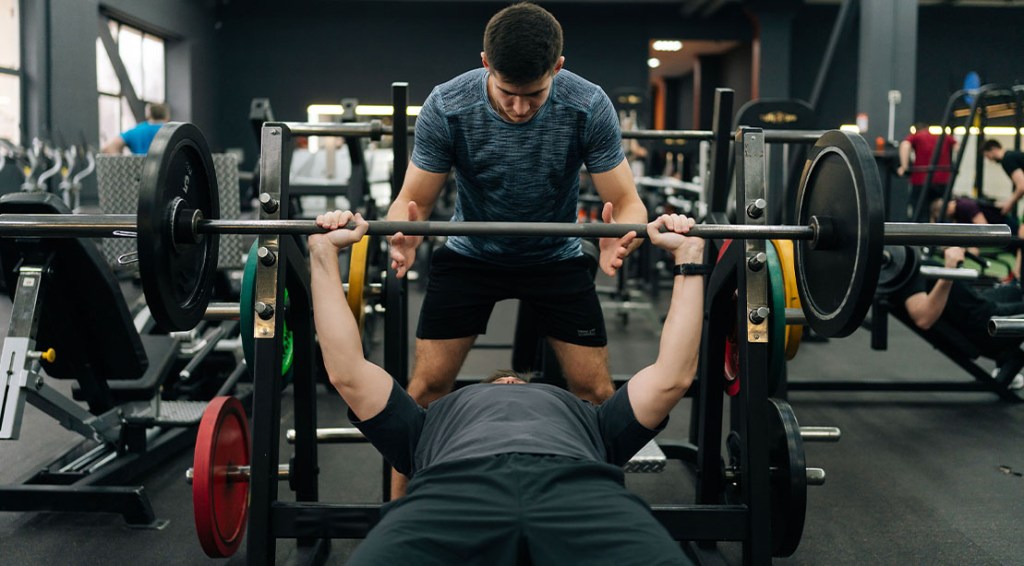
How to Use a Spotter During the Bench Press
Every serious lifter has either needed one or wished they had one. A good spotter isn’t there to upright row the weight while you pretend to bench press it. A good spotter keeps his hands close to—but not touching—the bar, ready to assist only if the bar stops moving or begins drifting toward your neck or face.
If you’re spotting someone, communicate before the set begins:
“How many reps?”
“Do you want help if it stalls?”
“You want a lift off?”
These simple questions prevent confusion once the weight gets heavy.
If you’re lifting alone, don’t attempt personal records. Either use a Smith machine, bench inside a properly adjusted power rack with safety pins, or keep the weight conservative enough that you can safely finish the set.
How to Increase Your Bench Press Strength Safely
One of the most common mistakes beginners make is changing exercises every workout because they saw something on social media. Resist the temptation. The body responds to progressive overload, not constant entertainment. Learn the bench press. Improve your technique. Add a little weight when you can. Perform one more repetition than last week. Small improvements repeated consistently beat flashy workouts every time.
Finally, don’t neglect the muscles that support the bench press. Strong upper back muscles stabilize the shoulder blades. Healthy rotator cuff muscles help protect the shoulder joint. Flexible chest and shoulder muscles allow the bar to move through its natural range of motion. A balanced program will always outperform one built around a single exercise.
The bench press has earned its reputation because it works. For generations, it has helped build bigger chests, stronger shoulders and more powerful triceps than almost any other upper-body exercise. But remember, the strongest lifter in the gym isn’t the guy who benches the most weight today. It’s the one who’s still benching pain-free twenty years from now.
Master the movement. Respect the weight. Check your ego. Stay consistent.
Do that, and the bench press will reward you for a lifetime.
Read the full article here
