


For generations, luxury has been defined by the things money could buy: sprawling homes, exotic travel, rare watches, and private jets. But among a growing circle of entrepreneurs, athletes, and high-net-worth individuals, a new status symbol is emerging, one that cannot be worn or driven.
Time.
Not just time in the abstract, but the ability to extend it. To preserve cognitive sharpness, physical performance, and metabolic health well into later decades of life.
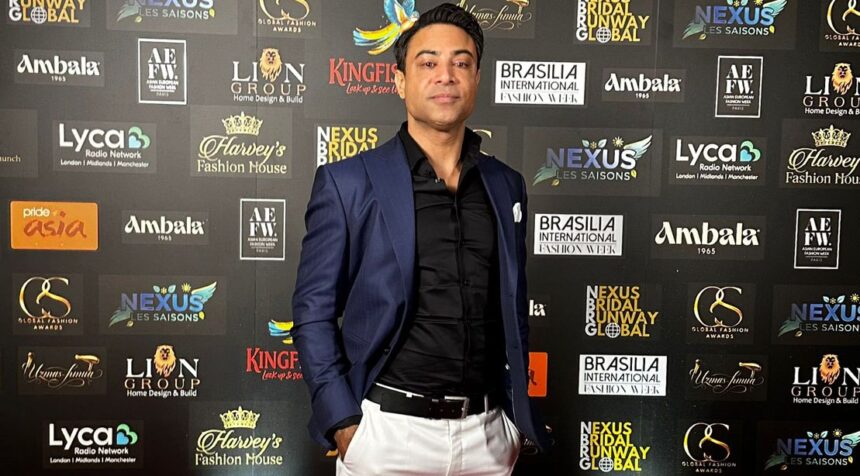
To understand how this shift is playing out at the highest levels, I sat down with Mini Vohra, a celebrity events strategist, Director of Cornucopia Events, British entrepreneur, and former barrister known for orchestrating high-profile experiences across the fashion, music, and entertainment industries. Through his work with elite performers, global celebrities, and ultra-high-net-worth individuals, Vohra operates at the intersection of luxury, performance, and culture, where trends don’t just emerge, they are defined.
As Director of Cornucopia Events, part of the Cornucopia Group, Vohra operates within one of the world’s most exclusive luxury event and concierge networks, serving billionaires, CEOs, sovereignties, and A-list celebrities across more than 175 countries through a global business valued in the hundreds of millions. The company organizes hundreds of elite events and international luxury experiences annually and has received repeated recognition under both Her Majesty Queen Elizabeth II and His Majesty King Charles III through the United Kingdom’s highest level of business honours for international trade. Operating at that level requires more than business success alone. It demands sustained energy, resilience, cognitive performance, adaptability, and the ability to function consistently under extraordinary pressure without burnout.
“When people first become successful financially, they usually buy the obvious things: the watch, the car, the holidays, the penthouse,” Vohra explains. “But eventually, especially amongst high performers, you realise there is one asset that makes every other luxury possible: your health.”
It’s a shift that is quietly redefining what luxury means.
Longevity Becomes a Lifestyle
The idea that lifestyle can influence lifespan is hardly new. Exercise, diet, sleep, and stress management have long been pillars of preventative health.
What has changed is the scale, and the sophistication, of the pursuit.
In today’s longevity clinics, optimizing health is no longer just about avoiding disease. It’s about pushing the boundaries of human performance and health span. Clients are seeking not only to live longer, but to remain physically and cognitively capable for as many of those years as possible.
“The irony is that true luxury used to mean indulgence,” Vohra explains. “Today, it increasingly means control- control over your energy, your focus, your appearance, your longevity and your quality of life.”
Some of the most visible advocates of this philosophy are technology entrepreneurs and investors who approach aging as a solvable engineering problem. Perhaps the most well-known example is Bryan Johnson, whose meticulously documented longevity regimen has attracted global attention.
Johnson tracks hundreds of biological markers and follows an intensive daily protocol aimed at reducing his biological age. His project, often referred to as Blueprint, has become a symbol of the broader cultural shift toward radical longevity optimization.
But while Johnson represents the extreme end of the spectrum, he is far from alone. Longevity-focused medical practices report growing demand from CEOs, venture capitalists, elite athletes, and executives who increasingly view health optimization as both an investment and a competitive advantage.
What Happens Inside a Longevity Clinic
At first glance, a luxury longevity clinic might resemble a cross between a medical center and a high-performance laboratory.
Instead of annual checkups, clients undergo comprehensive physiological evaluations designed to create an exceptionally detailed map of their health. Full-body imaging, cardiovascular screening, metabolic testing, genetic analysis, and advanced biomarker panels are often combined to detect early signals of disease, sometimes decades before symptoms would traditionally appear.
“High-profile individuals are no longer relying on generic advice,” Vohra notes. “They’re testing everything: hormones, inflammation, glucose response, recovery metrics, sleep quality, biological age. It’s all becoming highly personalised.”
From there, physicians, nutritionists, and performance specialists design highly individualized protocols tailored to the client’s physiology. These programs often blend clinical medicine with strategies more commonly associated with elite athletic training, creating a system where health is continuously monitored, adjusted, and optimized.
For many clients, the body becomes a managed system: tracked with the same precision as a business portfolio.
The Science Behind the Movement
Some elements of the longevity movement are supported by a robust body of research.
Resistance training remains one of the most powerful interventions for healthy aging. Maintaining muscle mass and strength is strongly associated with reduced mortality risk, improved metabolic health, and lower rates of frailty later in life.
Cardiovascular fitness is another major predictor of longevity, with higher VO₂ max levels correlating with significantly lower rates of cardiovascular disease and overall mortality.
Sleep quality, metabolic health, and inflammation control also play critical roles in slowing biological aging. Chronic sleep deprivation, insulin resistance, and systemic inflammation are all linked to accelerated physiological decline.
But not every intervention offered in the luxury biohacking world carries the same level of scientific certainty.
Peptide therapies, NAD⁺ infusions, hyperbaric oxygen treatments, and other emerging interventions are gaining popularity, but many remain under active investigation with limited long-term human data.
For some, that uncertainty is part of the appeal. The frontier itself has become a feature of the lifestyle.
The Psychology of Optimization
The rapid growth of the longevity industry is not solely about science. It is also about mindset.
For high-performing individuals accustomed to optimizing everything from business strategy to athletic output, the idea of optimizing biology itself is a natural progression.
“High performers increasingly treat health like elite business strategy,” Vohra says. “Prevention, optimisation, consistency. Discipline compounds just like money does.”
Longevity clinics reinforce this approach by turning biology into something measurable. Blood markers become performance metrics. Sleep scores become feedback loops. Biological age becomes a target to improve.
In many ways, longevity optimization mirrors elite sport: continuous measurement, constant adjustment, and relentless pursuit of marginal gains.
What People Get Wrong
Despite its growing popularity, the longevity movement is often misunderstood.
“I think people sometimes assume longevity is about trying to become immortal,” Vohra says. “The reality is much more practical. It’s about maintaining function, energy, cognition, resilience and quality of life for as long as possible.”
There is also a tendency to equate high cost with high effectiveness.
“Some high-end treatments are incredible,” he adds. “Others are simply luxury theatre.”
That distinction matters. While cutting-edge interventions can offer meaningful benefits, they are not substitutes for foundational health behaviors.
What the Fitness World Should Pay Attention To
While the six-figure longevity lifestyle may seem far removed from the average gym-goer, many of the most effective interventions remain remarkably accessible.
Strength training, cardiovascular fitness, sleep quality, nutrition, stress management, and maintaining a healthy body composition consistently demonstrate the strongest impact on both lifespan and healthspan.
The difference at the elite level is not necessarily the intervention itself, but the precision with which it is applied.
The irony is that the same fundamentals driving elite longevity are the ones most people still neglect.
The Future of Longevity Medicine
Despite skepticism from some corners of the medical community, longevity science is advancing rapidly.
Researchers are increasingly studying aging not as an inevitable decline, but as a biological process that may be modified through targeted interventions. Advances in genomics, biomarker analysis, and artificial intelligence are improving our ability to detect early physiological changes and intervene earlier than ever before.
Over time, technologies currently reserved for elite clinics may become far more accessible, potentially reshaping the standard model of preventative medicine.
Time as the Ultimate Asset
The rise of the longevity movement reflects a fundamental shift in how we define wealth.
For decades, success has been measured by accumulation. Longevity reframes that equation, focusing instead on preservation—of energy, cognition, physical capability, and overall quality of life.
“The goal is not perfection,” Vohra says. “The goal is longevity with quality.”
For those able to invest heavily, that pursuit may include sophisticated diagnostics and experimental therapies. But the underlying principle remains far simpler.
The same behaviors that build elite performance build a longer, stronger life.
Rigor. Discipline. Results.
Read the full article here
