


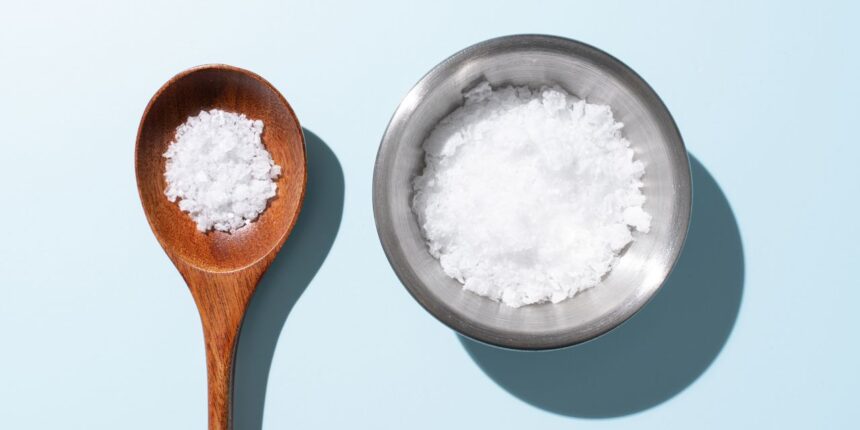
An ongoing push for “natural food” above all else has led consumers to make well-intentioned if sometimes misguided choices. Case in point: Iodine deficiencies are on the rise and it could have something to do with the fact that a lot of folks are trading iodized salt for seemingly healthier alternatives, like pink Himalayan and flaky sea salts.
These wellness darlings are touted both for their more interesting textures and flavors as well as the belief that they’re better for you because they’re less processed than regular old table salt. Except they don’t contain any iodine—an essential mineral for thyroid health—and that can be problematic when the salt we cook with is supposed to contribute to almost half of our daily iodine intake.
If you’ve become particularly attached to your Maldon, hearing that it might actually be doing more harm than good might make you salty. Though you’ll probably need to stop using it quite so frequently, the health professionals we chatted with said you don’t have to ditch it entirely either. Here’s their advice for getting the best of both worlds, plus a debrief on the ins and outs of all that iodine does and where to get it beyond your shaker.
Iodine is essential for hormonal function, but only a handful of foods naturally contain it.
The body needs iodine to produce thyroid hormones, which stimulate the thyroid and maintain a whole host of related functions like body temperature, growth, metabolism, and reproductive health, Lindsay Malone, MS, RD, LD, clinical dietitian and instructor in the department of nutrition at Case Western Reserve University, tells SELF. “When intake is too low, the thyroid can’t keep up,” and this can lead to goiter (neck swelling from an enlarged thyroid gland), hypothyroidism, fatigue, cold intolerance, slowed metabolism, and, in pregnancy, impaired neurological development of the fetus.
We get iodine from just a handful of sources, mostly dairy, eggs, seafood, salt, and sea vegetables like kelp, and the average adult needs to consume about 150 micrograms per day and up to 220 for pregnant folks or 290 for those lactating. Studies show that salt covers a little less than half of these needs, largely due to the fact that it’s accessible, affordable, and easy to fortify and store, and it doesn’t present challenges to those with dietary restrictions the way seafood and dairy might, Rozalina McCoy, MD, associate professor of medicine at the University of Maryland School of Medicine, tells SELF.
Unfortunately, trendy flaky salts are not a good source of iodine.
All salt contains some iodine naturally because of where it’s sourced—in the ocean or on soil, two iodine-rich environments—but it’s not enough to contribute to daily intake requirements in a meaningful way, Dr. McCoy says. Because of this, since the 1920s plain table salt in the US has been fortified to include more of the mineral. Fortification is a form of processing that adds nutrients that were stripped at an earlier stage or were never there to begin with into something—in this case, iodine into salt.
Read the full article here
