


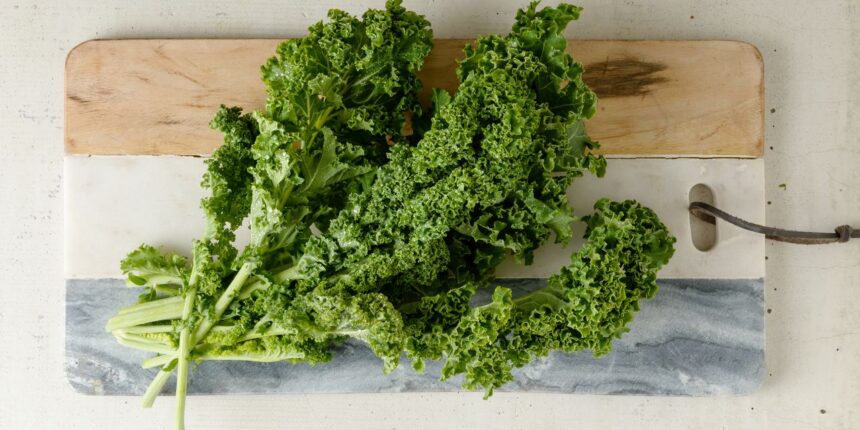
It’s easy to feel a little smug when you load your plate with kale salad. After all, the leafy green is packed with nutrients. But you’re missing the full potential of this powerhouse green if you don’t include one accessory: oil.
That’s the main takeaway from new research published in the journal Food Nutrition. The findings challenge the idea that eating your salad dry is the healthiest way to go. “It’s like giving the body the raw ingredients, but not the delivery vehicle,” Scott Keatley, RD, co-owner of Keatley Medical Nutrition Therapy, tells SELF. The study also uncovered some additional factoids about how to get the most out of your kale, giving you plenty of research you can work with.
This is all great news if you prefer your salad with extra flavor. But there are a few things dietitians want you to keep in mind before dumping a bunch of oil on your kale salad. Here’s what the study found, plus how to put these findings to good use.
There are a few ways to get the most out of your kale.
For the study, researchers created a laboratory model that mimics human digestion. They then prepared kale a few ways: cooked, raw, or with specially-formulated dressings and sauces that could make it easier for the body to access the green’s carotenoids. (In case you’re not familiar with them, carotenoids are powerful antioxidants that are linked with better immunity and vision, along with a lower risk of developing diseases like diabetes and heart disease.)
The researchers then analyzed kale’s nutritional performance when it was raw, cooked, raw or cooked with the dressing, and cooked directly in the dressing.
The researchers discovered that there was very little carotenoid absorbed with the raw kale, and cooking the leafy green made absorption even worse. But when they added an oil-based dressing or sauce, the amount of absorbed carotenoids significantly increased, regardless of whether the kale was cooked or raw. (Cooking the kale in the sauce delivered the same absorption results as when the sauce was added after the kale was cooked.)
“These findings have important implications for boosting the bioavailability of health-promoting nutraceuticals in fruits and vegetables, and provide a strategy for improving the healthiness of the modern diet through food design approaches,” the researchers wrote in the conclusion.
What’s behind this?
Some nutrients are fat-soluble, which means that eating them with fat enhances their absorption, Jessica Cording, RD, the author of The Little Book of Game-Changers, tells SELF. “Carotenoids, such as those found in kale, are examples of a fat-soluble nutrient,” she says.
Read the full article here
