


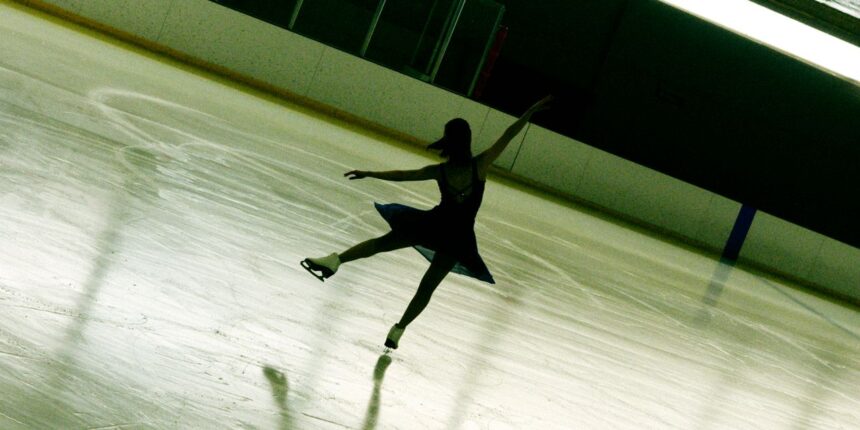
At the time of our interview, it’s about two months before the US Figure Skating Championships, which will determine whether the Shib Sibs make it to the Olympics.
“Skating was my dream,” Shibutani, now 31, tells me. “Competing at the Olympics was my dream. I made that dream come true between the ages of 4 and 23, but I’m so grateful that I’ve been able to recommit and make this decision again. It feels even more powerful this time around.”
The hard-fought path to her long-awaited return is as much a story of emotional recovery as a physical one. For seven years, she worked to heal physically from a grueling surgery, but perhaps even more challenging was making peace with the diagnosis that shook her sense of self. Now, she’s pulling back the curtain on what that time looked like—and how she’s redefining what comes next.
In the fall of 2019, not long before the world slipped into a global pandemic, Shibutani was supposed to attend a family screening of Jon Chu’s musical drama In the Heights when an unusual stomach pain stopped her—one unlike any injury or illness she’d experienced in her athletic career. “For me to be like, ‘No, no, no, I won’t go to the screening. I need to go to the ER’—it was just completely out of character,” she recalls.
While the discomfort was ultimately caused by a virus, a separate scan later revealed a more concerning abnormality: She had SDH-deficient renal cell carcinoma—a rare and hereditary form of kidney cancer.
“Cancer is a pretty terrifying word for anyone to hear, much less think about,” Shibutani says. She underwent a procedure to remove the tumor, which involved multiple incisions into her stomach. The recovery, she adds, took much longer than she expected—ironically made more difficult by her strong abdominal muscles. “My body did not react kindly,” she elaborates. “I had a very hard time walking for a couple of weeks, because the movement would affect my stomach area.” And for an elite athlete whose life was built around motion and activity, the mental toll was as heavy as the physical.
“I felt very disconnected from my body,” Shibutani says. And unlike any previous setback, “it was the first challenge I’d ever experienced alone.” Prior to this, she at least had her brother going through challenges alongside her—the grueling training seasons, the relentless pressure of competition, even the weight of family stress. This time, however, no one could truly relate to what she was going through.
Read the full article here
