


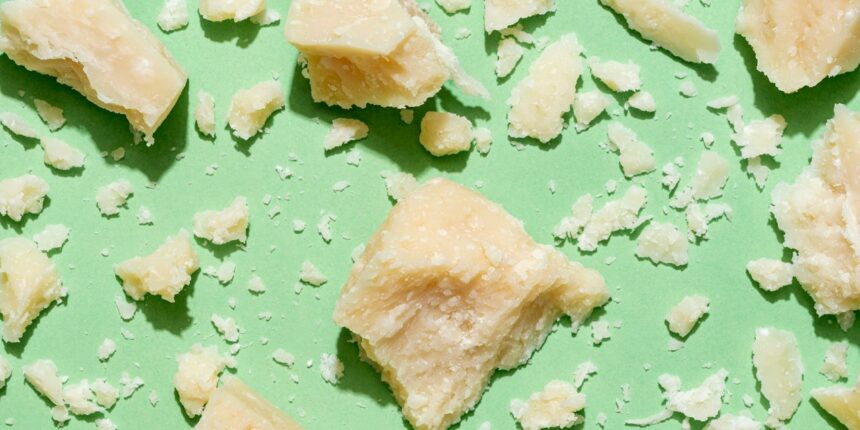
Not to sound cheesy, but Parmesan is in its It girl era—and it’s doing a lot more than simply topping off your pasta of choice. For starters, dairy as a whole has been elevated—literally—to top-tier status (alongside protein and healthy fats) in RFK Jr.’s new food pyramid. Parmigiano Reggiano reportedly signed with mega talent agency UTA in November for product placement in films and TV shows (strange but true). Big Parma’s also got a hold of proteinmaxxers across Instagram and TikTok, with fans touting blocks of the “king of cheese” as “the greatest protein bar money can buy.”
The high-protein hype has reached a fever pitch, and Parmesan cheese is wiggling its way into the cultural conversation. But is eating it by the handful really the life hack we didn’t know we needed?
Why this trend makes sense…at first
Since it’s shelf-stable, Parmesan is gym-bag friendly and desk-drawer ready (if you’re willing to brave curious glances from onlookers). Proponents also call out that it may include less additives and is therefore more “real” than your standard protein bar. Sure, it’s always good to aim to get more whole foods into your diet. Plus, the claims around its robust protein content actually do check out.
Per the United States Department of Agriculture (USDA), hard Parmesan offers over 35 grams of protein per 100 grams (think of a wedge that’s a bit thicker and bigger than a deck of cards). It’s a huge payoff in terms of weight alone, far outpacing famed protein sources like lean ground beef and chicken breast based on the same 100-gram yield, which contain 18.2 and 22.5 grams, respectively. For this reason—not to mention its delectable salty and umami tastes and crumbly texture—the rebrand of Parmesan as a dupe for a protein bar sounds too good to be true, especially if you already eat it on the regular.
Parmesan cheese is also a good source of bone-building calcium. It packs 1,180 milligrams per 100-gram block, surpassing the recommended daily intake of 1,000 milligrams for adults up to age 50 (and a hair shy of the recommended 1,200 milligrams for older adults). Another perk associated with Parmesan cheese is its minimal amount of lactose, says Maddie Pasquariello, MS, RDN, a Brooklyn-based dietitian, which makes it attractive for anyone who’s lactose intolerant or sensitive to dairy.
Should you eat Parmesan as a high-protein snack?
If you’re anything like me, you’re crossing your fingers for a resounding yes. Yet as is the case with most social media trends that promise quick fixes for your health and well-being, this one’s best approached with caution. Pasquariello offers a reality check: “Parmesan is very palatable and versatile when it comes to its use in recipes, but I definitely wouldn’t call it a protein or nutrient powerhouse, and I wouldn’t consume it as a protein bar,” she says.
Read the full article here
