


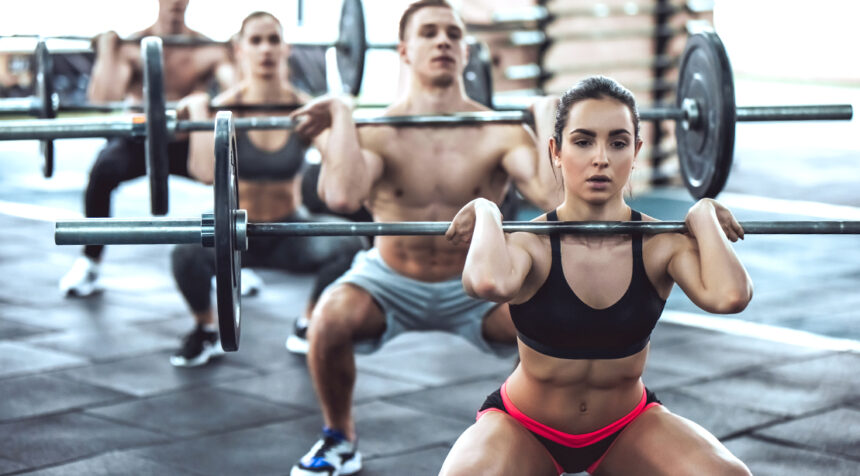
Shifting the barbell from the back to the front is a whole different ballgame for your squat setup. If you rush it, the bar rolls forward, pulling your elbows down or folding your torso into a good morning. Miss one detail, and the lift unravels fast.
Front squat setups will look different due to mobility issues, comfort, and grip preference, but the principles remain the same. Front squats require a secure rack position, upper-back tension, a solid brace, and a stance that allows you to go deep.
This pre-lift checklist walks you through the fundamentals of the front squat setup, step by step. When you dial it in, the bar stays racked, your torso is tall, and your quads will reach a new level of awesomeness.
What is the Proper Front Squat Setup?
Having the barbell across your chest adds a new level of discomfort to the squat, so pay attention to your setup to avoid increasing it.
Step 1: Bar Height and Rack Setup
Before the grip, elbows, or stance, you need the bar set at the correct height. Get this wrong, and you’ll waste energy before you begin. A clean rack setup allows you to unrack tall, keeping your torso stacked and your elbows ready to rise.
- Set the bar around mid-chest to collarbone height.
- You should be able to step under the bar and stand it up without quarter-squatting.
- The bar should rest on the front delts, not jammed into your throat or sitting in your hands.
Internal cue: Feel the bar on the shoulders.
External cue: Set the bar at collarbone height.
Coach’s tip: Decide your grip style before you unrack—clean grip, cross-arm, or straps. The idea here is to minimize decisions once you are under the bar.
Step 2: Grip Style and Hand Position
There is one core front squat principle: your shoulders, not your hands, support the bar. Choose a grip that keeps your elbows high and your torso tall. With the options below, it
is essential to keep your wrist pain-free, keep your elbows up, and have the bar sitting across your shoulders.
- Clean Grip: Fingers under the bar with wrists extended.
- Cross-Arm Grip: Arms crossed with hands resting on top of the bar.
- Strap-Assisted Grip: Straps looped around the bar and held like reins.
Internal cue: Relax the hands, support the bar with the shoulders.
External cue: Elbows and chest up.
Coach’s tip: If the rack position doesn’t feel right, rerack and start again.
Step 3: Elbow Position and Upper-Back Tension
If the front squat has a make-or-break detail, this is it. High elbows and an engaged upper back create the shelf that keeps the bar stable. The proper elbow position and a tight upper back keep your torso upright, allowing you to squat rather than tilt forward. Let either one slip, and the bar travels forward, compromising the lift.
- Drive your elbows up and forward.
- Think tall through the upper back without rib flare.
- The bar should feel glued to your shoulders.
Internal cue: Upper back tall and tight.
External cue: Drive your elbows to the ceiling.
Coach’s Tip: Engage your upper back and keep your chest proud to keep your elbows up.
Step 4: Unrack and Walk-Back
You need to unrack in a way that preserves everything you set above. The goal is to move the bar from the rack to your stance without disrupting posture or tension.
- Take your breath and brace your core before you unrack.
- Stand straight up to lift the bar out of the hooks.
- Keep elbows high as you clear the rack.
- Take a 2–3-step walk-back, then stop and begin to set your feet in your preferred stance.
Internal cue: Tall spine, core engaged.
External cue: Pull your head to the ceiling.
Coach’s Tip: Taking more than 3 steps back wastes unnecessary energy.
Step 5: Foot Position and Stance
The front squat requires a foot position that allows you to sit between the knees rather than over them, and keeps your torso upright with the bar stacked over your center of mass.
- Set your feet roughly shoulder-width apart and turn your toes out
- Keep your weight balanced over the midfoot.
Internal cue: Feel the whole foot on the floor.
External cue: Push your big toe into the floor.
Coach’s Tip: The ideal stance varies from lifter to lifter, and it’s best to get a feel for it before you unrack. Perform three jump squats and notice where your feet land on the third because that will be your stance.
Step 6: Rooting and Lower-Body Tension
Rooting your feet into the ground gives your hips and knees a stable platform to squat from and helps keep the bar stacked over your mid-foot.
- Screw your feet into the floor to create a slight external rotation at the hips.
- Maintain pressure through the midfoot and heel.
- Lightly engage your quads and glutes.
Internal cue: Feel your feet grip the floor.
External cue: Spread the floor apart.
Coach’s Tip: After the rooting, reengage your big toe.
The Front Squat Pre-Lift Checklist for Consistent Performance
Take a second or two to review the checklist below before crushing your set.
- Bar secure on the shoulders: not drifting into the hands.
- Elbows high and forward: creating a solid shelf.
- Upper back tight: chest tall and ribs down.
- Feet rooted: pressure through the midfoot.
- Brace set: torso tall.
- Eyes forward: not up or down
If everything feels locked in, you’re clear to squat.
Most Common Front Squat Setup Mistakes (And How to Fix Them)
Avoid these common setup mistakes that cause the bar to dump forward or your torso to fold.
- Unsettled rack position: If your wrists and forearms feel uncomfortable, your rack position is off. The bar should rest on the shoulders, with the hands along for the ride.
- Letting the elbows drop: Low elbows mean the upper back isn’t tight. If your elbows drop, the bar will roll forward every time. Always keep your chest up and upper back engaged.
- Rushing the setup: Moving too fast disrupts posture and tension. Slow down, stand tall, and settle before squatting.
- Forgetting your feet: Rooting your feet, feeling your big toes pressed into the ground, gives you strength from the ground up. Do this as part of your setup and between each rep.
The front squat rewards lifters who pay attention to the details. A clean rack position, high elbows, a tight upper back, and a solid brace are non-negotiable if you want to squat heavy.
Master the setup—and the strength gains will be sure to follow.
Read the full article here
